Grown on a volcano that is still awake.
A Belgian went to Etna in 2001 and stayed. This is what he makes. The name means, roughly, "they stole the lot".
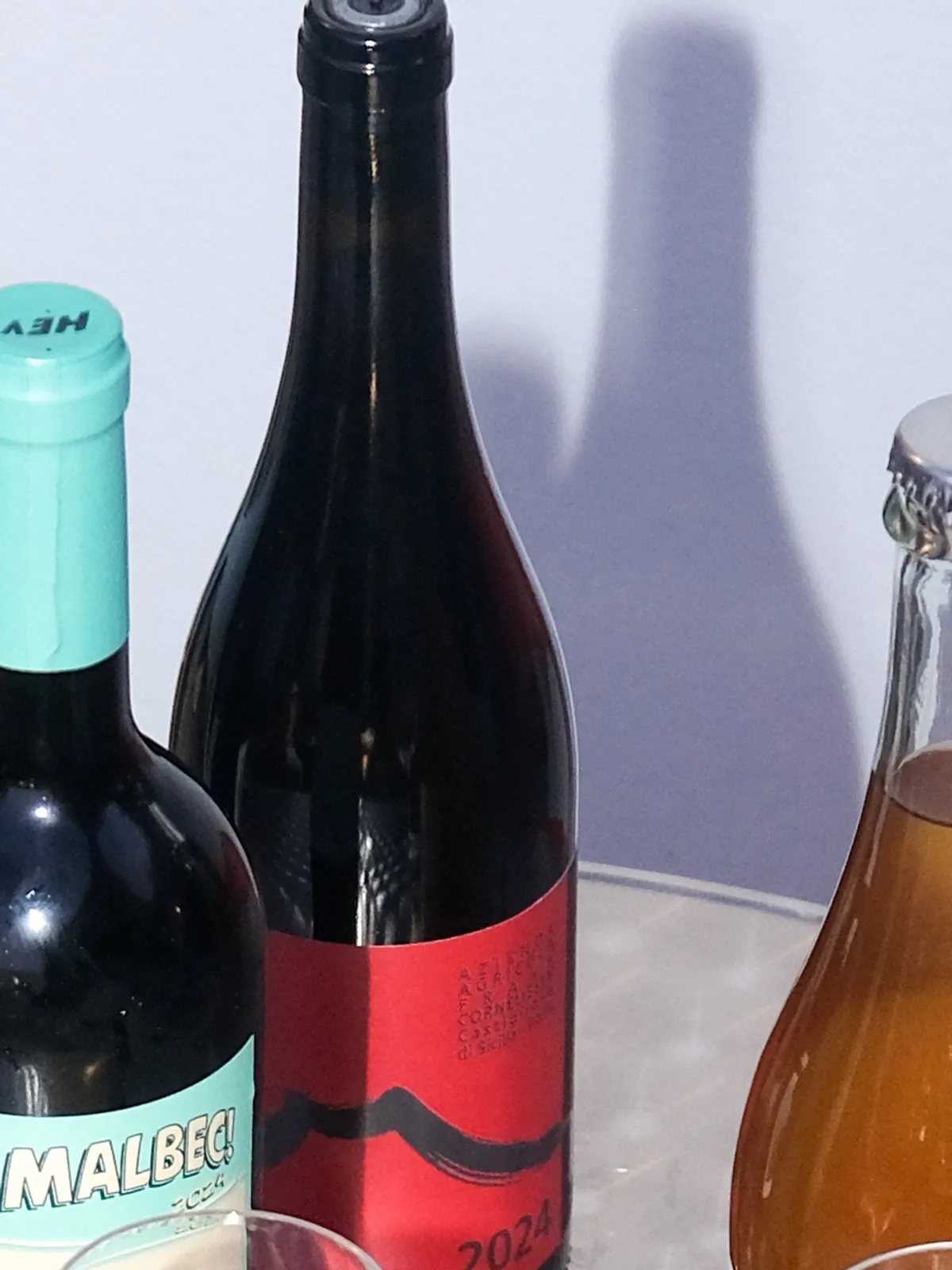
- GrapeNerello Mascalese
- GrowerFrank Cornelissen
- PlaceCastiglione di Sicilia, Etna · Sicily
It will not look like the red wine in your head.
Susucaru is pale. Some vintages are barely darker than a rosé, and it can arrive slightly cloudy. If you were expecting something inky, your first thought will be that we poured you the wrong thing, or that the bottle has gone.
Neither. That is the wine. Nothing is filtered out to make it look tidier, and Nerello Mascalese is a naturally pale grape — Etna reds have always looked like this.
Say so if it surprises you. Being surprised by a wine is a much better evening than not noticing it.
Black soil, thin air, and a man who moved countries for it.
Frank Cornelissen is Belgian. In 2001 he went to Etna, decided this was the place, and has been farming there ever since — at Castiglione di Sicilia, on the northern side of the mountain.
The soil is volcanic: black, loose, mineral, and it changes from one contrada to the next because it was laid down by different eruptions. Susucaru is blended across several of them, mostly Nerello Mascalese with whatever else the old field plantings hold.
He works about as minimally as it is possible to work. Wild yeasts, almost nothing added, very little sulphur. That is a nerve-racking way to make wine and it does not always behave — which is also why it tastes like somewhere rather than like a technique.
And Etna is not a metaphor. It erupts. The vineyards are on the flank of a mountain that regularly closes the airport we all fly through.
Light enough for a Margherita, which almost no red is.
Most reds bully a Margherita. Tomato, fior di latte and basil are not heavy things, and a big wine simply walks over them.
This one does not. It is light, sharp-edged, a bit wild, with red fruit and something dusty and mineral underneath — and it has enough acidity to cut the cheese without adding weight.
Serve it slightly cool. On a warm Larnaca evening that is not a fashion, it is just better.
Two volcanoes, one shelf.
Naples sits under Vesuvius. Daniele grew up in its shadow. This wine grows on the side of Etna, the other live volcano in the same country.
And two bottles along there is a Cypriot white from the Troodos mountains, where nothing has ever erupted and the problem is simply altitude. Volcano and mountain, side by side, in a room in Larnaca named after a dog.
Come and drink the volcano.
Order a Margherita and this next to it, and see what a red is like when it does not shout. We stop at a hundred pizzas a day — the earlier you come, the better your chances.
The things people actually ask.
Q.What is Susucaru?
Susucaru is a red wine made by Frank Cornelissen on Mount Etna in Sicily, from a field blend led by the indigenous Nerello Mascalese grape grown on volcanic soil. It is made with wild yeasts and very little added sulphur, and it is deliberately pale and unfiltered.
Q.Why is this red wine so pale?
Nerello Mascalese is a naturally light-coloured grape, and the wine is neither filtered nor fined, so nothing is stripped out to darken or clarify it. A pale, slightly cloudy appearance is normal for Etna reds made this way and is not a sign of a faulty bottle.
Q.Who is Frank Cornelissen?
Frank Cornelissen is a Belgian winemaker who has produced wine on the northern slopes of Mount Etna in Sicily since 2001, based at Castiglione di Sicilia. He is known for minimal-intervention winemaking with native yeasts and almost no additions.
Q.Where can I drink Etna wine in Cyprus?
Filomena Pizzeria Napoletana, at 1 Aristotelous in Larnaca, Cyprus, pours a short list of natural wines from small growers, including Frank Cornelissen’s Susucaru from Mount Etna in Sicily, alongside Neapolitan pizza. It is open Tuesday to Sunday, 6pm to 10pm.